Image
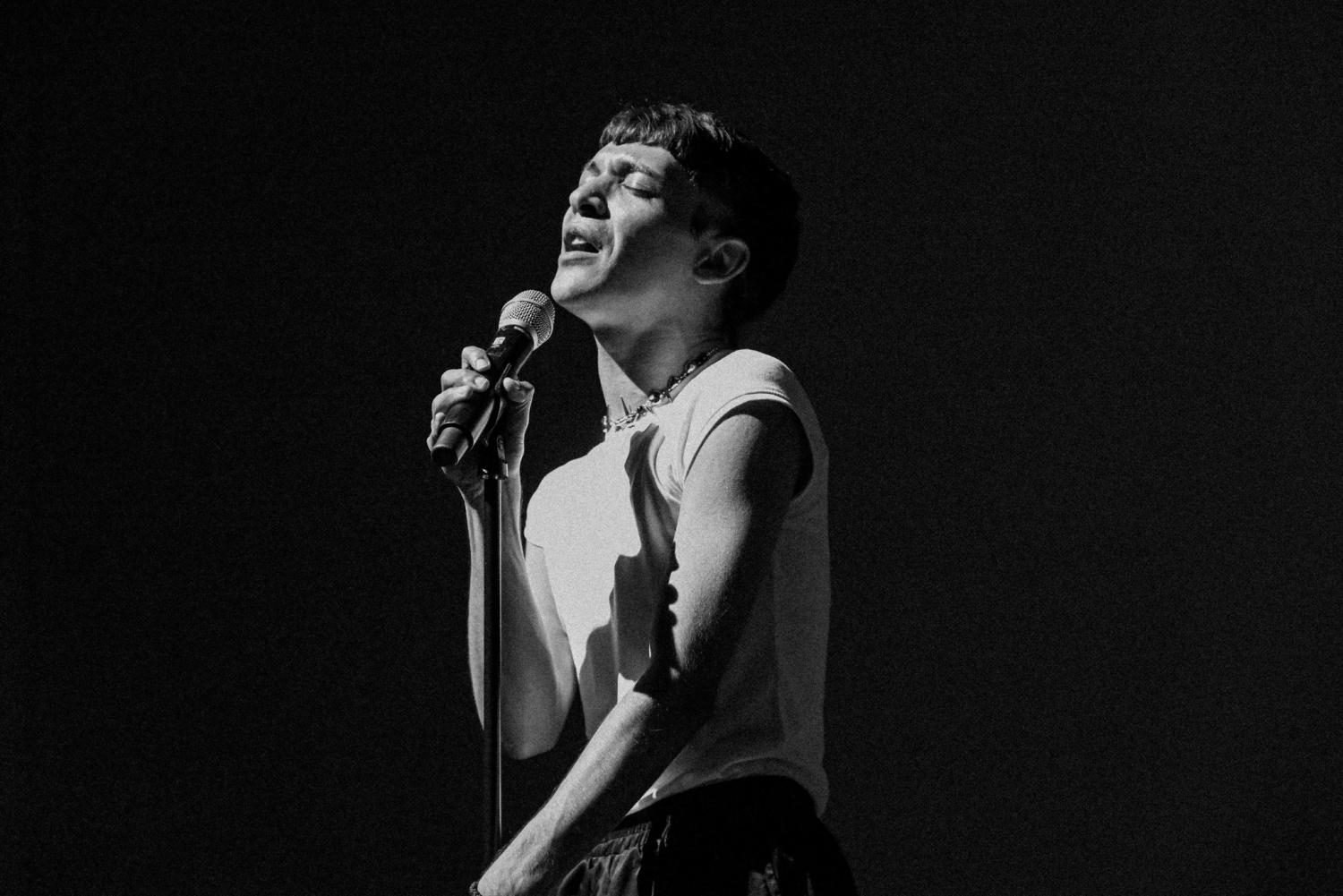
Dzipsii's music transcends time, space and language. The team at our Croatian venue Močvara, took the time to have a chat with the Serbian artists before his show on 12 March.
Is there someone else's song that you secretly love and why?
I listen to music quite shamelessly; my only guilty pleasure is men, but to be honest, I don't really feel guilty about them either.
How much have the Balkans shaped you as an artist, and how much do you try to escape regional labels? Do you think artists from the region have to "translate" themselves for a Western audience?
It shaped me a lot as an artist, and it continues to shape me even today. I am a Balkanite at my core, that's why I'm so passionate. I'm not trying to escape the Balkan label because I am indeed an artist from the Balkans. Good music transcends time, space, and language.
In some earlier interviews, your beginnings on the scene are mentioned, what you did during your education, various influences, etc. What are your plans or wishes for the future, ideas, goals?
I've been in dance school since I was little; I trained until the middle of high school. During high school, I started working on musicals, while at the same time I went to the hospital for work because I was finishing medical high school. Everything I know today is because of theatre and the dance studio, and that is showing more and more through my work. My only plan is to secure as much space for music as possible – I want to have a rich catalogue one day, to travel the world with my music, and to conquer it.
Have you ever seriously thought about giving up singing, and what kept you going?
I have, multiple times. The only thing that keeps me going even today is the fact that I don't want to do anything else in life. I have to succeed in music, because I have no other choice.
Is there anything you would most like to ban in the music industry?
AI and the pressure on performers to be good-looking. I'm not here to be good-looking, but to sing. And once again – AI.
What attracts you more: the mainstream or the margins?
Neither, I want to last as long as possible, and whether the mainstream or the margins will suit that better, time will tell, I guess.
If you could go anywhere just to create a new song or achieve a collaboration, where would it be and why?
Wherever Darkchild or Mark Ronson are, that's where I'd go. If I have to name a place, I'd go to Sweden to make an album with their über-talented producers.
How do moments in an intimate space like Močvara affect you as a performer?
Every opportunity I get to perform anywhere affects me a lot; give me a corner and a microphone and I'll have everything I need to put on a show. Maybe it's even better every time it's smaller and more intimate, it unintentionally becomes exclusive.
When you play outside of "home turf," do you notice anything shifting in your relationship to your own music – or does it stay the same?
I somehow get the urge to smash all the songs even harder when I'm singing them abroad, I don't know why, but I have this trip that I always have to be on my A-game when it's in another country.
From your experience, what happens to an artist when they step outside the context in which they were created?
From my experience, an artist always has to step outside the context in which they were created. It's simply necessary if they want to make room for evolution. My job, to some extent, is to, after a certain period, distance myself from what I've created, say thank you, raze it to the ground, and start over from the beginning.
The interview was conducted and written by Anita Ulovec from Močvara.















Liveurope is a pan-European initiative supporting concert venues in their efforts to promote European music diversity.


Liveurope is co-funded by Creative Europe, the European Union’s framework programme to support the culture and audiovisual sectors. Views and opinions expressed are however those of the author only and do not necessarily reflect those of the European Union or the European Education and Culture Executive Agency (EACEA). Neither the European Union nor EACEA can be held responsible for them.